Decatur high school student examines gentrification & racism in articles

Late last year I was contacted by a Decatur High School student reporting on what appeared to her to be racial bias in disciplinary actions at her school and the precipitous drop in racial diversity at the school. The student located me after reading some of my work on gentrification and racism in her community.

I’m a senior at Decatur High School, and I write for our school magazine, Carpe Diem,” wrote Ellie Ritter in a November 2016 email. “I’m writing an article on Decatur’s gentrification and the displacement it’s caused.”

We arranged a telephone interview and I subsequently agreed to let her publish some images from my website.

Ellie’s reporting package examining gentrification and race in her hometown was published in the December 2016 issue of Carpe Diem, Decatur High School’s award-winning magazine. Kudos to Ellie for digging deeper into these topics than the professional journalists working in Atlanta and Decatur.

© 2017 D.S. Rotenstein


Gored by a steer

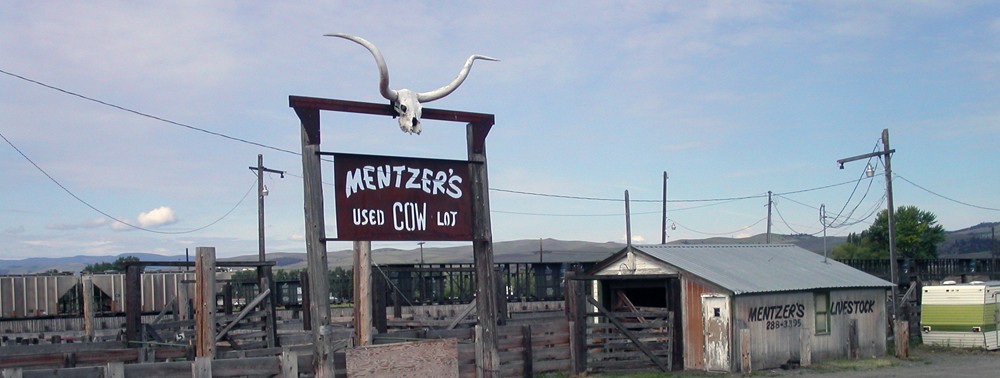
The news earlier this week that a cow had escaped from a slaughterhouse in New York City went viral. After all, it’s the 21st century. What are cattle doing in the middle of big cities?

https://twitter.com/imdrunkeichel/status/834147131388784640

https://twitter.com/enablerabe/status/834594821377499136

Yet, the headlines and the obligatory humor that followed would have been familiar to urban dwellers in any North American city since the turn of the 19th century. As cities expanded and drove yards on their hinterlands were absorbed by expansion. Later on, after 1850, railroads carried large numbers of cattle, sheep, and hogs to urban abattoirs,

Inevitably, some animals escaped while being offloaded from train cars (and later trucks) or they broke free from pens in stockyards while awaiting auction or slaughter. In the 1880s, a generation after the nation’s first union stockyards opened in a farm field outside of Pittsburgh, the local East End News ran several articles recounting wayward food on the hoof:

GORED BY A STEER (Saturday, September 4, 1886)

On Wednesday a steer broke out of the East End Stock Yards and for a time had things his own way. Mrs. Andrews was on the pavement in front of her house on Station Street, but before she could get out of the way the animal had gored her seriously. On her head were several scalp wounds and her body was considerably bruised. Medical aid was summoned and it was found that none of the wounds were dangerous. The bull was recaptured and taken back to the yards.

NEWS ITEMS (August 25, 1888)

A wild steer created a panic Wednesday afternoon … Mr. O’Neal, a butcher in Lawrenceville, was taking a drove of cattle home from the stockyards when one broke away and started back.

***

Some things never change. Cities with lots of people still need to feed those people. As long as we have cities and we consume fresh meat, stories like the one out of New York will keep coming. How would Twitter have treated the East Liberty beast that gored Mrs. Anderson, I wonder?

© 2017 D.S. Rotenstein

Lyttonsville Black History Month program

I would like to thank the staff of the Gwendolyn E. Coffield Community Center for hosting me Saturday February 18. And, a big acknowledgement to the Silver Spring residents who gave up a sunny and warm Saturday midday to learn about African American and civil rights history in Silver Spring, Maryland.

The walking tour returns this spring, along with a new local non-profit partner with plans to integrate my history work into its Silver Spring racial equity program. Stay tuned for dates and details.

Charlotte Coffield, the center’s namesake sister, was instrumental in arranging the program. I am fortunate to have met Charlotte and the other Lyttonsville residents with whom I have spoken the past year. I am looking forward to learning more about the community’s history and the role its people played in Silver Spring’s history. Their stories have enriched my understanding of how people of color and their histories are erased from suburbs.

Charlotte Coffield stands in front of a case inside the Coffield center’s lobby where her family and community’s history are on display.

Silver Spring Black History Tour program. Photo by Alan Bowser.

© 2017 D.S. Rotenstein

Silver Spring’s monument to white supremacy

Silver Spring Armory. Historic American Buildings Survey photo by Bill Lebovich.

In 1998, crews demolished the Silver Spring Armory. Located in the heart of the suburban Washington suburb’s central business district (CBD), the Armory occupied prime real estate earmarked to provide parking for a new urban renewal project.

Built in 1927, the Armory quickly became unincorporated Silver Spring’s de facto city hall and civic center. In 1984, the State of Maryland declared the property surplus and it was transferred to the Maryland-National Capital Parks and Planning Commission. After rehabilitation work, the building opened as a community center and in 1984 it was listed in the Montgomery County Master Plan for Historic Preservation. Continue reading

Grandpa Joe was an immigrant

Joseph Steinhart in his orphanage uniform. Undated photo.

My grandfather, Joseph Steinhart, arrived at Ellis Island October 6, 1920. He was 16 years old. He loved the Unites States despite the anti-semitic discrimination that he faced throughout his entire life. Unable to attend the college of his choice. Unable to be an engineer in the Navy. And, witness to many acts of enthocentlrism towards others during his life before dying in April 1994.

 
Were it not for my grandfather’s stay at a Warsaw orphanage before coming to the United States, the world might never know parts of the amazing story of the institution’s founder, Dr. Janusz Korczak. Survivor accounts describe Korczak leading a column of orphans from the Warsaw ghetto to the death camp at Treblinka. My grandfather’s memories and drawings have informed generations of historians writing about the Holocaust and Korczak biographers.

Orphanage. Undated sketch by Joseph Steinhart.

I would like to think of my grandfather as a hero for what he gave me — a thirst for knowledge and a drive to fight for what’s right — but that would be insufficient. My grandfather is a hero for bearing witness to the worst and best of humanity. If he were alive today, he would be sitting at his desk with a stack of white typing paper composing by hand in his distinctive engineer’s block script letters to the editor and letters to government officials decrying the inhumane and un-American actions by the new American president. I desperately wish he were here today to share his wisdom, his courage, and to be a witness yet again to the best and worst humanity has to offer.

1978 St. Petersburg Times photo of my grandparents showing some of his memorabilia related to Janysz Korczak.

Joseph Steinhart’s clipping binder.

Historic preservation shines a light on a dark past

In October 2016, the National Council on Public History published an e-book titled Preserving Places: Reflections on the National Historic Preservation Act at Fifty From The Public Historian. The volume is a collection of invited essays that discuss various aspects of public history published to commemorate the 50th anniversary of the National Historic Preservation Act.

My essay, “Historic Preservation Shines a Light on a Dark Past,” appears on pp. 18-19.

Historic Preservation Shines a Light on a Dark Past by David Rotenstein on Scribd

Silver Spring’s newest visual junkyard

This … is not written in anger. It is written in fury … it is a deliberate attack upon all those who have already befouled a large portion of this country for private gain, and are engaged in befouling the rest. — Peter Blake, Preface to God’s Own Junkyard: The Planned Deterioration of America’s Landscape (1964)

Ellsworth Place Mall, Colesville Road and Fenton Street facade, September 2016.

Ellsworth Place Mall, Colesville Road and Fenton Street facade, September 2016.

After more than a decade of false starts involving redevelopment plans and rebranding campaigns, an urban mall in Silver Spring, Maryland, has a new name, new look, and new stores. Ellsworth Place, née City Place, was completed in 1992 in an effort to jumpstart redevelopment in Silver Spring’s central business district. The mall was built as an addition to a historic Hecht’s department store, which was completed in 1947 and which left Silver Spring 40 years later for a new regional mall in nearby Wheaton.

Rebranding City Place involved converting its worn and bland suburban commercial spaces and “re-tenanting,” a process the owner described as attracting more upscale merchants to attract millennials and other new middle class residents moving to Silver Spring.

Montgomery County’s historic preservation law was one hurdle owners had to clear. The former Hecht’s building is a protected county landmark and the Montgomery County Historic Preservation Commission has regulatory jurisdiction over changes to the building’s exterior. Changes like new entrances, windows, and signage.

Ellsworth Place Mall/Former Hecht's, Ellsworth Ave. and Fenton Street facade, September 2016.

Ellsworth Place Mall/Former Hecht’s, Ellsworth Drive and Fenton Street facade, September 2016.

Continue reading

Invisible by design? Silver Spring’s black history sites

Since last spring I’ve been asking public officials, neighborhood leaders, longtime residents, and strangers in the street where to find sites associated with African American history in downtown Silver Spring, Maryland. The answers I received were pretty much the same: there aren’t any.

The closest I came to getting an answer that didn’t include suggestions for nearby Lyttonsville or Sandy Spring came from Montgomery County Planning Department director Gwen Wright. She suggested a site near the D.C. line where a historical marker commemorates the arrest of William Chaplin who in 1850 was accused of spiriting slaves out of Washington to freedom. “Not many others that are popping into my mind,” Wright, who led the county’s historic preservation office for 20 years between 1987 and 2007 [PDF], wrote in an August email.

Historical marker, Jesup Blair Park, Silver Spring, Maryland.

Historical marker, Jesup Blair Park, Silver Spring, Maryland. County planning director Gwen Wright said that this marker commemorating an 1850 event was the only site within downtown Silver Spring that she knew was associated with African American history.

As I wrote in an earlier post, Silver Spring developed as a sundown suburb — a place where African Americans could not buy property or rent apartments and homes — for most of the 20th century. Contrary to the comments I got during my informal queries about where to find African American heritage sites in downtown Silver Spring, I have identified

Silver Spring Heritage Trail Marker, Georgia Ave., Silver Spring, Md.

Silver Spring Heritage Trail Marker, Georgia Ave., Silver Spring, Md.

about 20 sites — buildings, spaces, and objects — that tell a cohesive story about African Americans in Silver Spring during the 20th century. I will be discussing those sites in my walking tour October 22.

The tour and these articles are the first steps in what I hope will be a community conversation about how history and historic preservation are produced in our community. It’s an important conversation because for too long, Silver Spring’s historical narratives — with a few notable exceptions — have ignored African Americans altogether or minimized and marginalized these members of our community. These omissions have spilled over into public policy decisions that range from urban planning initiatives to the designation and protection of historic places in our community.

My latest article, Silver Spring, Maryland, Has Whitewashed its Past, has just been published by the History News Network. I hope that my neighbors and community leaders don’t read it as an indictment of how we have failed to recognize and include the African Americans who helped build our community and make it successful; my wish is that we use the article and the tour as an opportunity to move forward by producing history and historic preservation that celebrates our entire community, not just the wealthy white men who currently dominate the narratives and landscape.

© 2016 D.S. Rotenstein

The three Silver Springs

There are three Silver Springs. There’s the mica-flecked spring where Francis Preston Blair established an antebellum farm in rural Maryland north of the District of Columbia.

The Silver Spring site. A reconstructed 19th-century acorn-shaped gazebo is in the background.

The Silver Spring site. A reconstructed 19th-century acorn-shaped gazebo is in the background.

Then there’s the early 20th century place created by real estate entrepreneurs and community boosters with visions of creating an all-white middle-class Washington suburb. Continue reading

Is the Greater Lyttonsville Sector Plan bad planning?

Residents who will be impacted by a new master plan proposed for a part of Montgomery County, Maryland, asked me to testify at a hearing before the Montgomery County Council. This post contains the testimony I submitted for the official record. A substantially abbreviated version was presented in the hearing session held September 29, 2016.

Montgomery County Council
Public Hearing on the Greater Lyttonsville Sector Plan
Testimony of Dr. David Rotenstein
September 29, 2016

Good Evening. My name is David Rotenstein. I am a professional historian, a Silver Spring resident, and a former chairman of the Montgomery County Historic Preservation Commission. I am here to speak against the proposed Greater Lyttonsville Area Sector Plan because of fatal deficiencies in a key area of the plan before you: its treatment of lyttsonville-signhistory and historic resources.

Last Sunday the Washington Post published an article about the Talbot Avenue Bridge. Relying heavily on my work, the reporter interviewed several Lyttonsville residents, two of whom spoke here Tuesday evening, about the bridge’s history and its importance to the community. They told the reporter, and me two months earlier, that the bridge was an important artifact that conveys significant information about Lyttonsville’s past as an African American community segregated from Silver Spring, a community that excluded African Americans from buying property and living there for most of the twentieth century. Lyttonsville was Silver Spring’s other side of the tracks. The Talbot Avenue Bridge, as longtime Lyttonsville residents told me (and the Post), does much more than carry traffic over a railroad. It connects communities and it is a palpable reminder of the Jim Crow segregation that defined Montgomery County social and economic life for a significant period of time. Continue reading