Montgomery Preservation: Tear down that fence

In 1998, the historic preservation group, Montgomery Preservation, Inc. (MPI), bought the old and abandoned B&O Railroad station in Silver Spring, Maryland. A fence continues to separate the property from a popular and historic pedestrian bridge. Shortly after MPI acquired the property, novelist and Silver Spring native George Pelecanos introduced the pedestrian bridge and the railroad station to readers around the world in his 2001 novel, Right as Rain:

[Terry Quinn] crossed the street to the pedestrian bridge that spanned Georgia Avenue. He went to the middle of the bridge and looked down at the cars emerging northbound from the tunnel and the southbound cars disappearing into the same tunnel. He focused on the broken yellow lines painted on the street and the cars moving in rows between the lines. He looked north on Georgia at the street lamps haloed in the cold and watched his breath blow out into the night. He had grown up in this city, it was his, and to him it was beautiful. Sometime later he crossed the remainder of the bridge and went to the chain-link fence that had been erected in the past year. The fence prevented pedestrians from walking into the area of the train station via the bridge. He glanced around idly and climbed the fence, dropping down over its other side. Then he was in near the small commuter train station, a squat brick structure — George Pelecanos, Right as Rain (Grand Central Publishing, 2001).

Pedestrian bridge over Georgia Ave. in Silver Spring. Photographed Spetember 2016.

Pedestrian bridge over Georgia Ave. in Silver Spring, looking south from the edge of MPI’s property. Photographed September 2016.

Continue reading

Talbot Avenue: a bridge in black and white

There is no question that the bridge carrying Talbot Avenue over the CSX Railroad tracks in Silver Spring, Maryland, is historic. Two Maryland state agencies, the Montgomery County Planning Department, and the Federal Transit Administration all agree that the small bridge has historic merit and is eligible for listing in the National Register of Historic Places. The agencies also agree that the bridge needs to be replaced to accommodate construction of a new light rail line connecting suburban Washington, D.C., communities. But do the agencies understand why the Talbot Avenue Bridge is historically significant?

Talbot Avenue Bridge, August 2016.

Talbot Avenue Bridge, August 2016.

Built in 1918 by the B&O Railroad, the bridge carries automobile, pedestrian, and bicycle traffic over the railroad now owned and operated by CSX. The bridge connects the historically African-American Lyttonsville community with early twentieth century residential subdivisions established on the periphery of unincorporated Silver Spring. Lyttonsville was founded in the 1850s by a freed slave free person of color named Samuel Lytton and it became one of several dozen African American hamlets scattered throughout Montgomery County. Silver Spring and its residential subdivisions were a sundown suburb: racialized space where African Americans were unable to live because of racially restrictive deed covenants and where public space and private businesses were governed by strict Jim Crow segregation.

The Talbot Avenue Bridge may be the last surviving historically significant structure in the Lyttonsville community. This post explores the various historic preservation efforts undertaken to document the bridge and the community’s perspectives on the bridge and its history. The reasons why the Talbot Avenue Bridge isn’t better understood and isn’t protected from demolition like other officially designated Montgomery County buildings and structures may be a policy gray area but they are clearly visible in black and white terms.

Continue reading

Washington’s Bloomingdale neighborhood tackles gentrification using history

One of the greatest injustices in South of Market redevelopment has been the callous obliteration of its past. — Chester Hartman, Yerba Buena: Land Grab and Community Resistance in San Francisco (San Francisco: Glide Publications, 1974).

Urban planner Chester Hartman’s observation about San Francisco’s Yerba Buena neighborhood looms large as one Washington, D.C., neighborhood is trying to prevent its past from being displaced and rewritten as the forces of gentrification sweep through. Residents of Bloomingdale, an early District of Columbia suburb that was absorbed in the late 19th century by Washington, have mobilized to undertake an innovative interdisciplinary effort to seize control of the neighborhood’s future by gaining a better understanding of its past.

My latest article for the National Council on Public History’s History@Work examines Bloomingdale’s project. In the H@W piece I touched on how Bloomingdale residents and the volunteer researchers and community planners struggle to define gentrification. It’s not an easy task.

Older businesses share street fronts with newer ones like this yoga studio in Washington's Bloomingdale neighborhood.

Older businesses like the DC Mini Market share street fronts with newer ones like yoga studios and restaurants with patio seating  in Washington’s Bloomingdale neighborhood.

Continue reading

Regentrification in Atlanta’s former meatpacking district

When [Anne Quatrano] and her husband, Clifford, first moved Bacchanalia from its original location in Buckhead to the Westside in 1999, the neighborhood was hardly a neighborhood at all. “It was desolate,” Quatrano says. Seventeen years later, Howell Mill Road is prime real estate, hot with new apartment complexes, boutique clothing stores, and hip coffee shops — Atlanta Magazine on the relocation of first-wave gentrifiers in Atlanta’s Westside Provisions District.

Atlanta's Westside Provision District, 2014.

Atlanta’s Westside Provisions District, 2014.

Once the heart of Atlanta’s stockyards and meatpacking district, the Howell Mill Road area  west of the city’s midtown suffered from disinvestment and abandonment until the 1990s when upscale restaurants and boutiques began moving in. Many of the new businesses drew heavily on the area’s history. New businesses incorporated meat industry names into their titles. Establishments like the Abattoir restaurant, White Provisions, and Star Provisions anchored the district, which was rebranded the Westside Provisions District.

westside-02

Westside Provisions District, 2014.

Now, as Atlanta Magazine recently reported, a pair of the first-wave gentrifiers, Star Provisions and Bacchanalia (owned by the same company) are relocating. Reasons given include parking pressures (new developments have private decks) and the business owner’s inability to reach a new rent deal with the landlord.

Star Provisions and Bachhanalia, 2014.

Star Provisions and Bacchanalia, 2014.

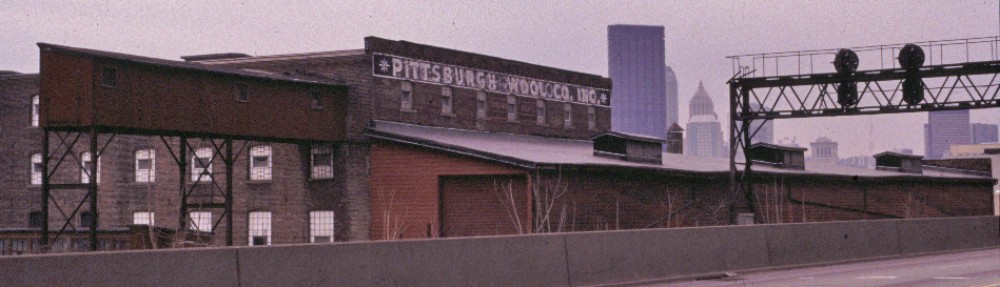
Gentrified meatpacking districts are one of the phenomenon’s ironies. Whether it’s New York’s Meatpacking District or Washington’s changing Benning Road area or Pittsburgh’s Northside, there’s something about places where animals were converted into dollars that now are spaces where neighborhoods are being cut up, repackaged, and sold to new types of consumers.

Washington Square, New York City.

Meatpacking District, New York City.

© 2016 D.S. Rotenstein

The curious history of Bladensburg’s Spa Spring

Open spaces are important parts of the cultural landscape. The Washington region is chock full of parks with histories as magnificent as the settings with which they are associated. The National Mall and Rock Creek Park are two notable examples. Other metro area parks have lesser-known histories or have been overtaken by development and erased from the landscape. Bladensburg, Maryland’s, Spa Spring is one example with close ties to Washington’s history.

Bladensburg is an 18th-century Prince George’s County town that hugs the east bank of the Anacostia River. Adjacent to the original town limits there was an undeveloped and frequently flooded tract with free-flowing springs. Today it includes property within the Maryland-National Capital Planning Commission’s Anacostia River Stream Valley Park and Bladensburg’s light industrial fringes. But 200 years ago it was part of Henri Joseph “H.J.” Stier’s 729-acre Riversdale plantation. Continue reading

The “Decatur Plan” revisited

Did Decatur, Ga., have a plan to turn its city all white as some urban legends and local rumors suggest? In a conspiracy theory sense, it’s not likely. But, the city certainly created an atmosphere through 35 years of official policies and resident actions that instilled in many African American residents a belief that there was a “Plan” to remove them.

[1] I told my mom recently that I don’t even want to live here any more because I can’t go to work in the morning without looking around, wondering which way I should go to avoid being stopped because I’m driving her car. I can’t come home at night without wondering if I should go down DeKalb Avenue or come down [Interstate] 20 and go through Kirkwood. I don’t know which way to even make it home and I can’t be comfortable. — Decatur resident, Decatur City Commission, 21 April 2014

[2] Decatur’s a great place. I love it. I love seeing the signs saying one of the ten greatest places in the U.S. to live. It makes me feel so good. But then I know there’s something under the carpet and y’all should know it and a lot of African American people do know it.

That we feel like we’re not wanted in Decatur.– Decatur resident, Decatur City Commission, 21 April 2014

[3] They’d be every day trying to get you to sell, to get out. I guess to get out so they can just finish so it will be all white. That’s what I think it is — Decatur resident, April 2012

The Decatur Plan wasn’t hashed out in a smoke-filled backroom in the towering former Decatur Federal bank building. Instead, it is a cluster of loosely fitting motifs or rumors built on a conspiracy theory originating in Decatur’s African American kitchens, living rooms, barber shops, and churches. Continue reading

The “value gap” in history, historic preservation

I recently read Princeton University African American Studies professor Eddie Glaude’s new book, Democracy in Black: How Race Still Enslaves the American Soul. Glaude elegantly described what he called the “value gap”:

When I say that the value gap is rooted, in part, in our national refusal to remember, I am not invoking some politically correct notion of history that simply includes previously excluded groups. How we collectively remember is bound up with questions of justice. Or, to put the point differently, what we choose to forget often reveals the limits of justice in our collective imaginations.

As I completed my paper for this year’s Delta Symposium, Glaude’s book informed how I analyzed the creation of Decatur’s Authorized Heritage Discourse and the city’s historic preservation program. Glaude’s value gap is the most apt way to view Decatur and its relationship to African Americans, their history, and their historic resources.

Delta-slide-cover-2016

It’s not that Decatur hates African Americans in an old-school white supremacist fashion. Rather, Decaturites (city officials and many residents) simply don’t place as high a value on African Americans and their history as they do whites and the historic places with deep attachment among the city’s white residents. It shows in their policies towards affordable housing, taxation, community engagement, education, and, yes, historic preservation. Continue reading

Two Dukes, one building, and a whole lot of speculation

Curious coincidence? About 1913 young Edward “Duke” Ellington began hanging out in a pool hall operated by Frank Holliday in a building in the 600 block of T Street NW owned by Washington, D.C. physician Louis Kolipinski.

Howard Theatre vicinity, c. 1919. Arrow indicates former Frank Holliday pool hall location. Credit: Baist's Real Estate Atlas of Surveys of Washington, District of Columbia, Vol. i, Plate 32.

Howard Theatre vicinity, c. 1919. Arrow indicates former Frank Holliday pool hall location. Credit: Baist’s Real Estate Atlas of Surveys of Washington, District of Columbia, Vol. I, Plate 32.

Kolipinski was born into a Russian (Polish) immigrant family and he graduated from Georgetown medical school. He began practicing medicine in 1897 and by the first decade of the 20th century was investing in real estate throughout Washington. He owned several buildings in the 600 block of T Street NW including the two-story brick building where Holliday and later proprietors operated a pool hall. The Howard Theater, completed in 1910, is located across an alley to the east.

Continue reading

Fairway: Silver Spring’s ghost town

During World War II, the U.S. government built “temporary suburbs” throughout the United States. One of those suburbs was located just north of the District of Columbia in a part of unincorporated Silver Spring, Maryland, called Four Corners. For a brief period during the war, the development was a ghost town. At least that’s what some critics of the 238-unit public housing project called it.

Fairway Houses location. Adapted from Google Maps.

Fairway Houses location. Adapted from Google Maps.

In 1942, Washington’s slum clearance agency (the Alley Dwelling Authority; later, the National Capital Housing Authority) began scouting sites in Montgomery and Prince George’s counties for temporary defense housing sites where migrants to the metro region could live while working in government agencies and defense-related industries.

The agency selected two sites in Prince George’s county where it built one 500-unit project near College Park and another 315-unit project near Suitland. After hitting considerable opposition to a proposed 800-unit development near Kensington in Montgomery County, the ADA settled on building in Four Corners. Twenty-eight acres north of Forest Glen Road and south of University Blvd. (then known as Old Bladensburg Road) in scattered sites were condemned. The Montgomery County project was called the “Fairway Houses,” a name derived from surrounding residential subdivisions.

Map showing Alley Dwelling Authority projects.

Map showing Alley Dwelling Authority projects. Fairway is highlighted. Report of the National capital housing authority for the ten-year period 1934-1944.

Continue reading

Silver Spring’s Perpetual Building may be historic …

Former Perpetual Building Association building, 8700 Georgia Avenue, Silver Spring, Md.

Former Perpetual Building Association building, 8700 Georgia Avenue, Silver Spring, Md.

… But not necessarily for the reasons preservationists suggest.

In 2007 Montgomery County, Maryland,  historic preservation advocates asked county leaders to add the former Perpetual Savings Association bank building in downtown Silver Spring to the county’s Master Plan for Historic Preservation. The designation would have ensured the 1958 building’s presence along Georgia Avenue in perpetuity. Instead, the proposed designation led to litigation and recriminations. The Perpetual case was precedential, examining the pitfalls of preserving buildings of recent vintage and the minutiae of due process in county master plan legislation.

The Perpetual Building Association was a Washington banking institution founded in 1881. It built branches throughout the District during the early 20th century and expanded to Montgomery County after World War II.  The bank became one of the leading local mortgage lenders, helping provide the capital for homebuilding in Washington’s rapidly expanding automobile suburbs.

Continue reading