For Charlotte Coffield, Black history wasn’t something she would pull from a closet shelf and dust off for one month each year and talk about it to White audiences. Every month was Black History Month. Charlotte didn’t need to open a book or go to a museum to see the faces of the Black men and women who changed their communities and our nation for the better. All Charlotte had to do was find the nearest object where she could see her own reflection. Charlotte Annieperry Coffield died September 11, 2024. She was 91.

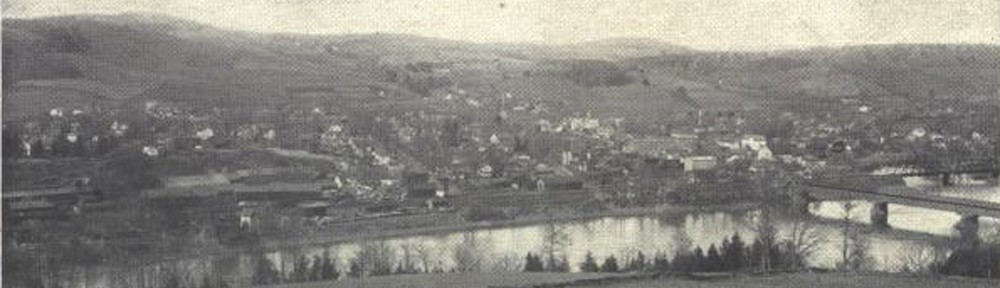
Charlotte lived her entire life in a suburban Washington, D.C., community called Lyttonsville. For most of its history, Lyttonsville was Silver Spring, Maryland’s, other side of the tracks. Founded in 1853 when a free Black man, Samuel Lytton, bought a four-acre farm, the community became one of more than 40 rural all-Black enclaves or hamlets in segregated Montgomery County, Maryland. Lyttonsville is a liminal space in-betwixt and between Black and White, suburban and rural, North and South. Charlotte Coffield’s story parallels the community’s history and then became an indelible part of Lyttonsville’s history as she dedicated the last years of her life to preserving it.
Growing up in Lyttonsville, Charlotte lived in a home without running water and in a neighborhood with no paved streets. She attended a two-room “colored school” and like many Black people in Washington and its suburbs, she found a career in the federal workforce.
Charlotte worked as an assistant to Dr. Boyce Williams in the U.S. Department of Health, Education, and Welfare. Williams was hearing impaired and Charlotte learned sign language to communicate with him. Charlotte became the first American Sign Language interpreter in the federal government and she pioneered new workplace tools for hearing impaired people. Charlotte’s work earned wide acclaim and Gallaudet University awarded her an honorary doctorate.

After she retired, Charlotte dedicated her life to activism and to undoing decades of erasure of Lyttonsville’s history and people by local historians, historic preservationists, and government agencies. The final chapter in Coffield’s life involved uplifting the story of the Talbot Avenue Bridge, an old railroad bridge that connected Lyttonsville with Silver Spring, a sundown suburb where Black people couldn’t buy homes, see movies, or eat in restaurants.
That’s the abridged version of Charlotte’s story, one that might have been suitable for a Washington Post obituary, had the newspaper that had no qualms extracting her knowledge of Black history for its readers bothered to write one. There was much more to Coffield’s story and her immersion in Black history as a subject and a way of life. I first met Charlotte Coffield in 2016 when I interviewed her for my research into gentrification and erasure. We exchanged information in dialogues about history and public policy. In 2018, we became collaborators to celebrate the Talbot Avenue Bridge’s centennial and efforts to ensure its commemoration after its demolition. What follows draws from my interviews and collaborations with Charlotte, my friend and my teacher.
Continue reading

